The home of architecture and design in the Asia-Pacific
Get the latest design news direct to your inbox!

Get the latest design news direct to your inbox!
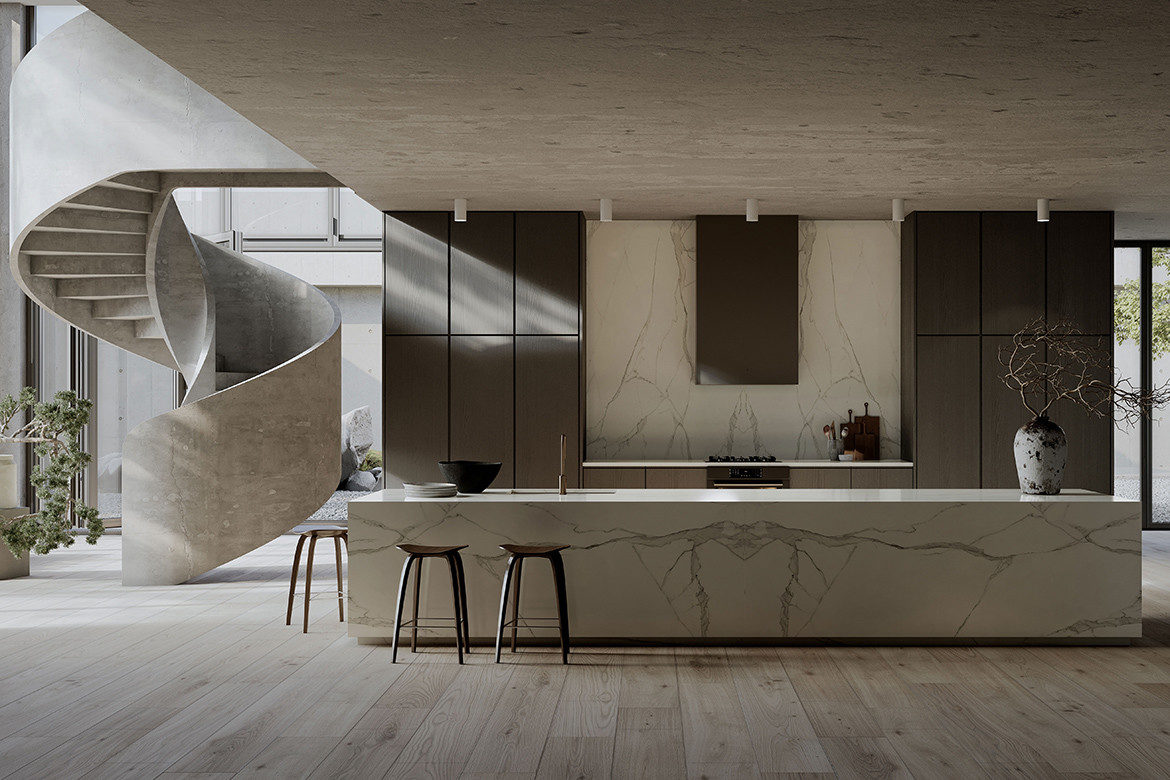
By taking a natural material and adding to its pre-existing qualities, new possibilities emerge for improved performance, sustainability and innovation. A recent CPD Live session explains how this applies to engineered stone.

November 2nd, 2022
To start at the beginning: what is engineered stone? More pertinently, what is it to engineer a natural material?
Understanding the answers to these fundamental questions is crucial for appreciating the benefits of engineered stone, a material that can be used for almost any horizontal surface. As Tone Wheeler, director of Environa Studio, explains, “the tradition of using raw materials in their raw state has been somewhat superseded by being able to engineer them to a higher grade.”

It means improving upon the inherent qualities of a material, a process reliant upon a sophisticated understanding of that material. With knowledge of factors such as durability, stratch-resistance and water-tightness in place, additions can be made to enhance qualities and minimise flaws. With stone, this often takes the form of adding quartz silica and polymeric resin.
With such engineering, the parameters dictated by natural materials are expanded. These natural drawbacks, such as inconsistency in performance and size, are lessened while benefits such as strength and durability are retained or enhanced. In short, “you can make a material to a much higher standard if you engineer it,” says Wheeler.
Related content: CPD Live tensile mesh
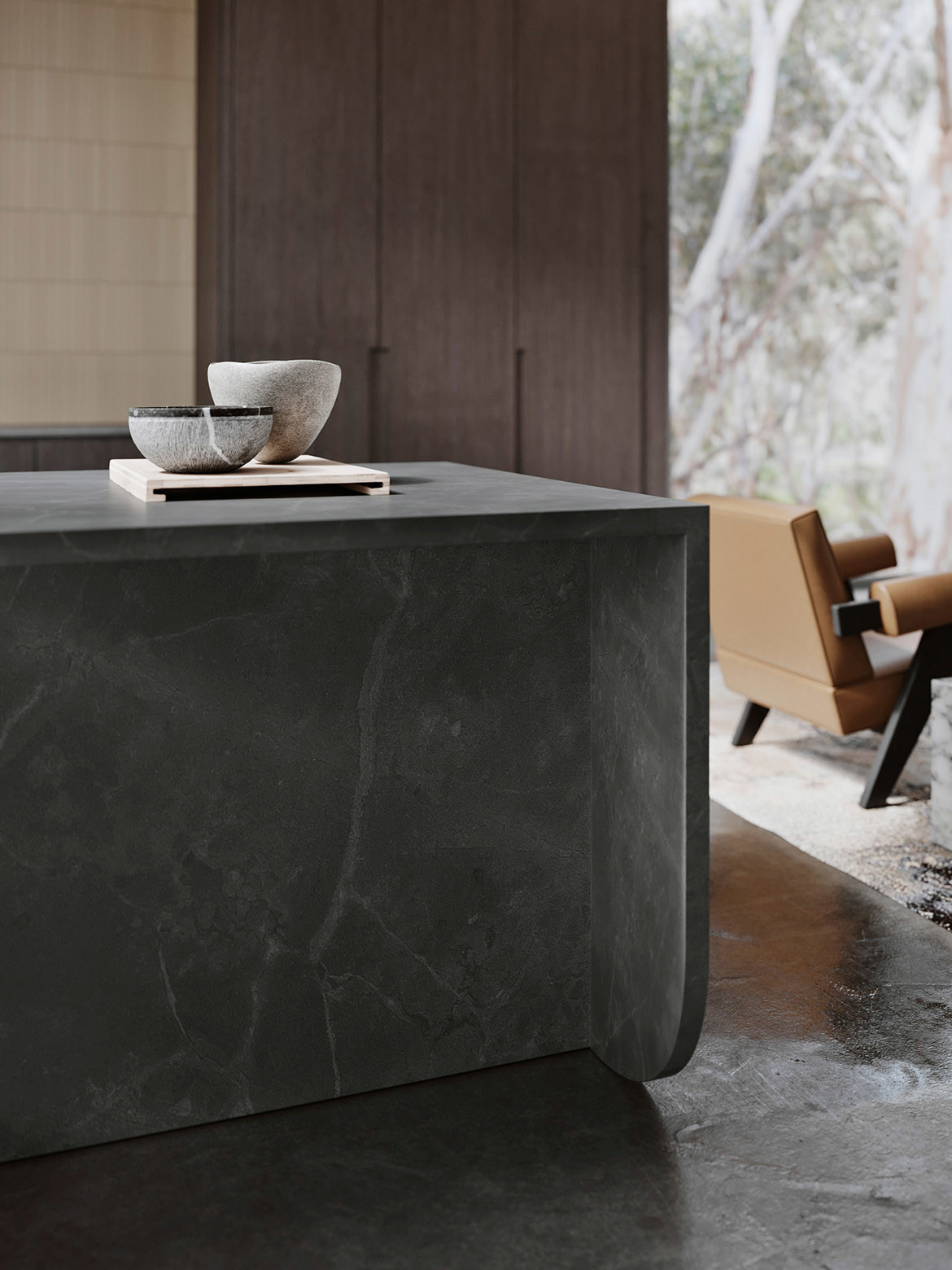
One of the most important benefits to be gained from engineering stone is greater sustainability. This manifests itself in a reduction of waste due to higher levels of material reliability and fewer off-cuts. As UNSW senior lecturer Dr Sing Darcy notes: “the nature of engineered products is that you will have guaranteed consistency in a project.”
Engineering and manufacturing products off-site allows for unused pieces of material to be accounted for earlier in the process, rather than creating waste at site which is then often not recycled. This of course lends itself to working with prefabricated pieces as a means of exercising greater control of materials on-site, just one area open to further innovation in engineered surfaces. Smartstone managing director Belinda Kelaher explains, for example, how slab sizes can be designed to specifically supply a single kitchen.
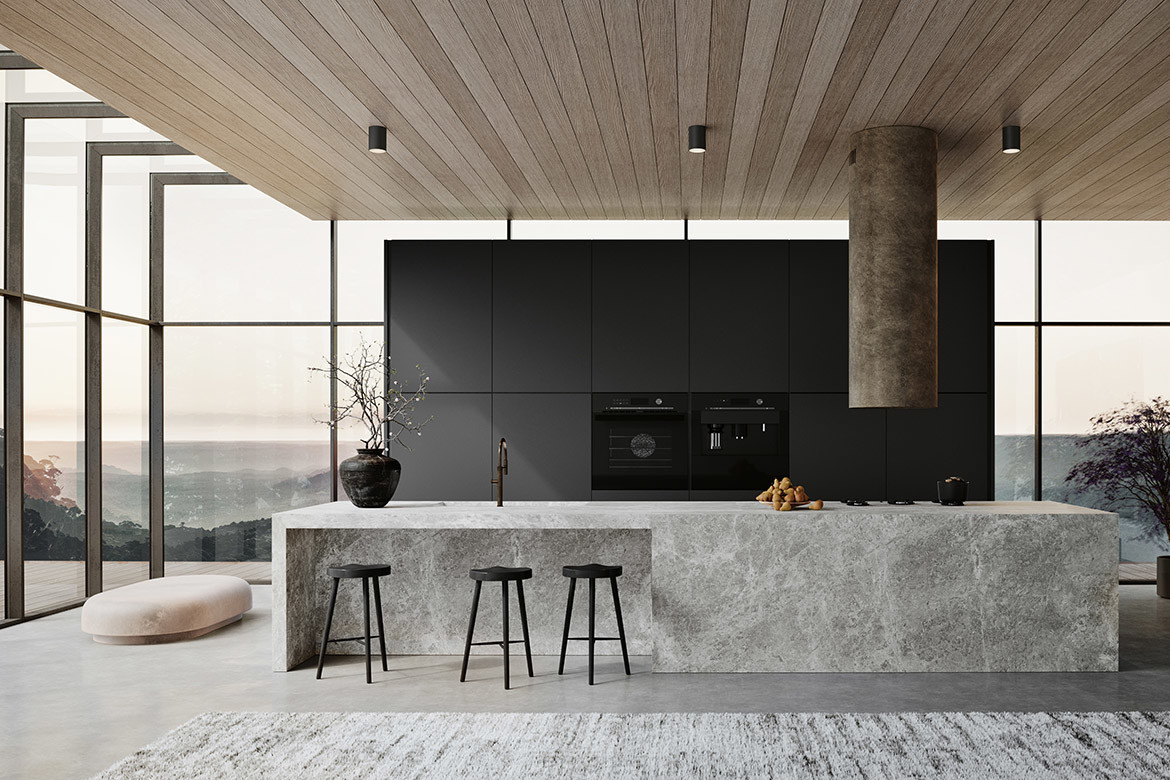
Another aspect of waste reduction is improved durability. Wheeler notes that in Australia, we see bathrooms replaced on average every 26 years and kitchens every 22. This lack of longevity recalls the old story of the ship of Theseus, whose individual parts were replaced every few years until no original material remained. Improved materials take away the paradoxical question of whether the same object remains because they simply last longer, causing less waster overall.
There have been concerns about health in relation to the dust produced by engineered stone. This is a point, however, that Kelaher is clear on: “the product is perfectly safe in its manufactured form and the risk only lies in unsafe manufacturing processes.”
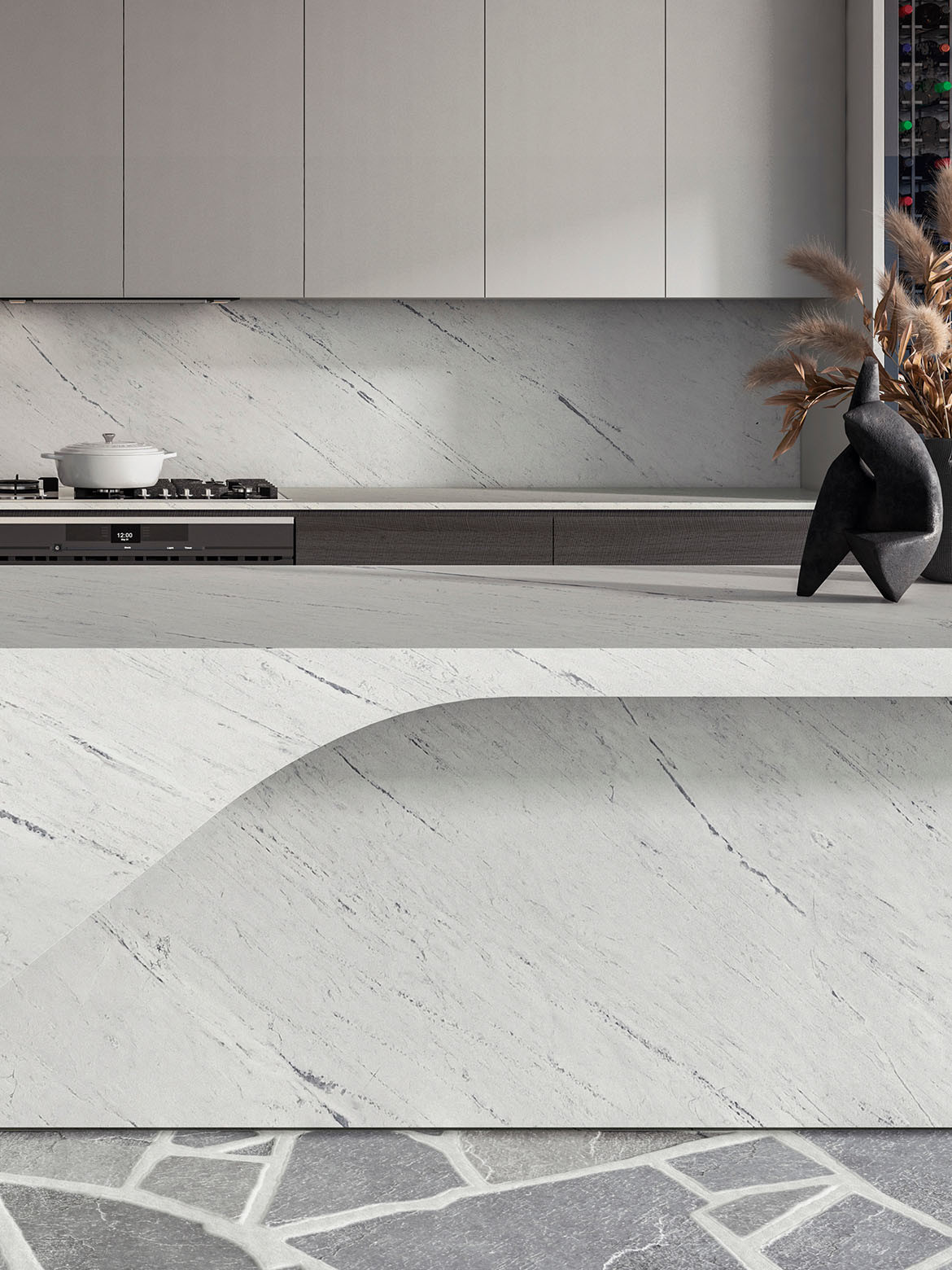
More specifically, it is imperative that the risks relating to dust during stone cutting are managed safely. This is achieved by preventing the unsafe practice of dry cutting, with government regulations enforcing compliance in such areas.
With safe manufacturing processes in place, engineered stone provides exciting design opportunities alongside increased performance, quality and sustainability.
Smartstone
smartstone.com.au
Photography
Courtesy of Smartstone
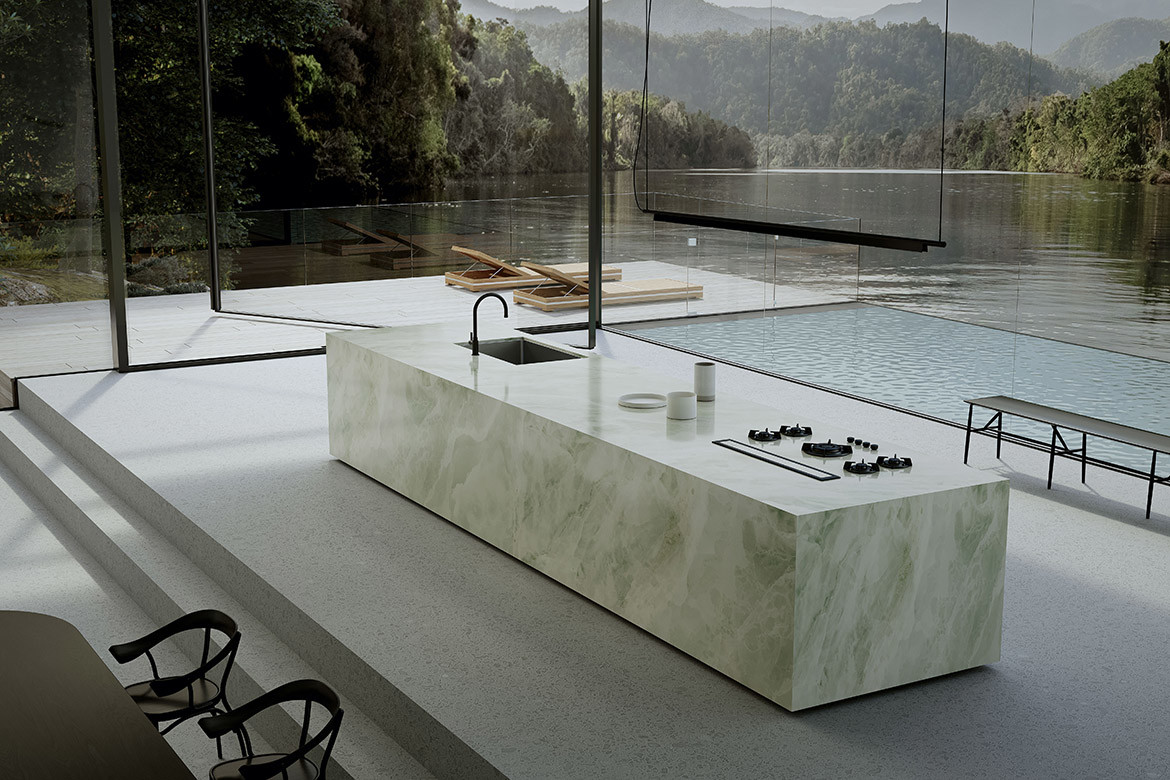
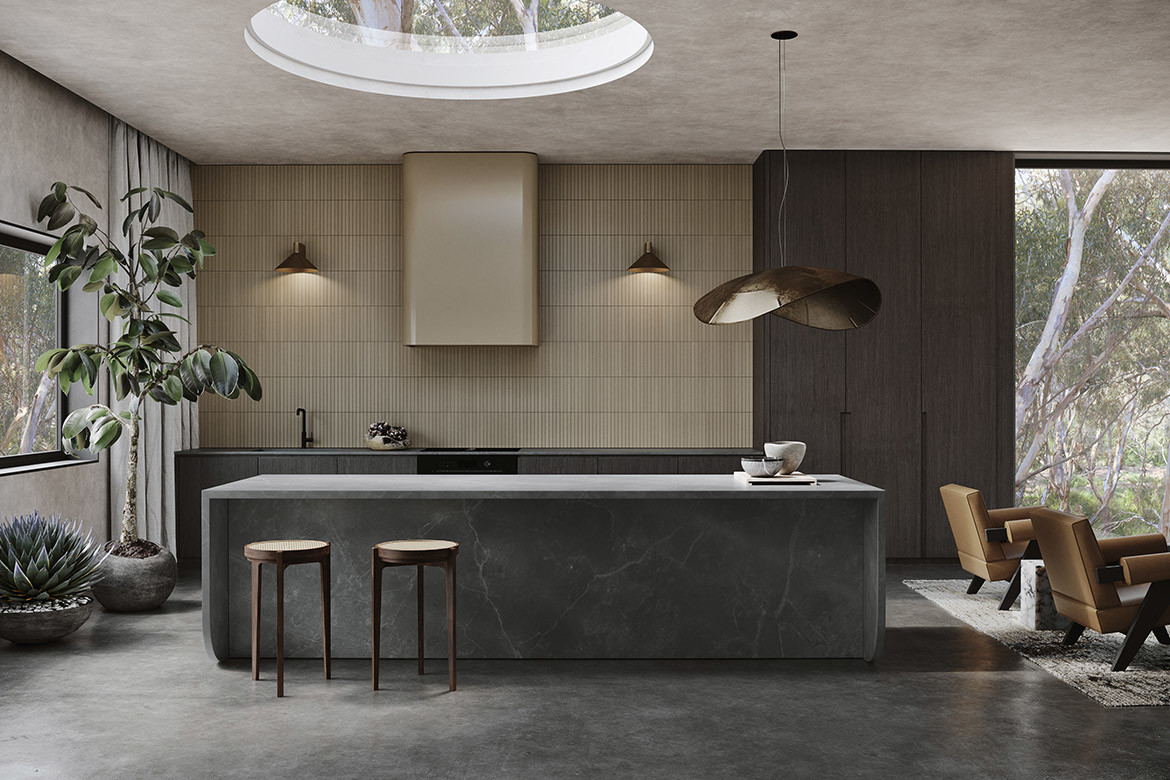
CPD Live Safe, Smart, Sustainable and Stylish – Engineered Stone Products Breaking New Ground, presented by Smartstone, was facilitated by Matthew McDonald (Indesign) and featured panellists Belinda Kelaher (Smartstone), Tone Wheeler (Environa Studio) and Dr Sing Darcy (UNSW).
The full discussion with questionnaire for one formal CPD point is available to stream on demand, along with other CPD Live sessions.
INDESIGN is on instagram
Follow @indesignlive
A searchable and comprehensive guide for specifying leading products and their suppliers
Keep up to date with the latest and greatest from our industry BFF's!
The internet never sleeps! Here's the stuff you might have missed