The home of architecture and design in the Asia-Pacific
Get the latest design news direct to your inbox!

Get the latest design news direct to your inbox!
Designed by Volkan Alkanoglu, Drift is created to bridge a physical divide – a creek – between two halves of one neighbourhood and their respective park systems.

Photography by Peter Molick
February 3rd, 2022
In the short span of 50 years, Singapore has gone from a city filled with slums and choked with congestion to a clean, modern metropolis with world-class public infrastructure. Its success stems from long-term urban planning that involved large scale developments. These efforts in turn attracted foreign investments and millions of international tourists every year pre-COVID-19. But perhaps it’s time this small but efficient city state redirects its focus to improving community well-being not through grand gestures, but small actions that allow people to appreciate and find contentment within their neighbourhoods.
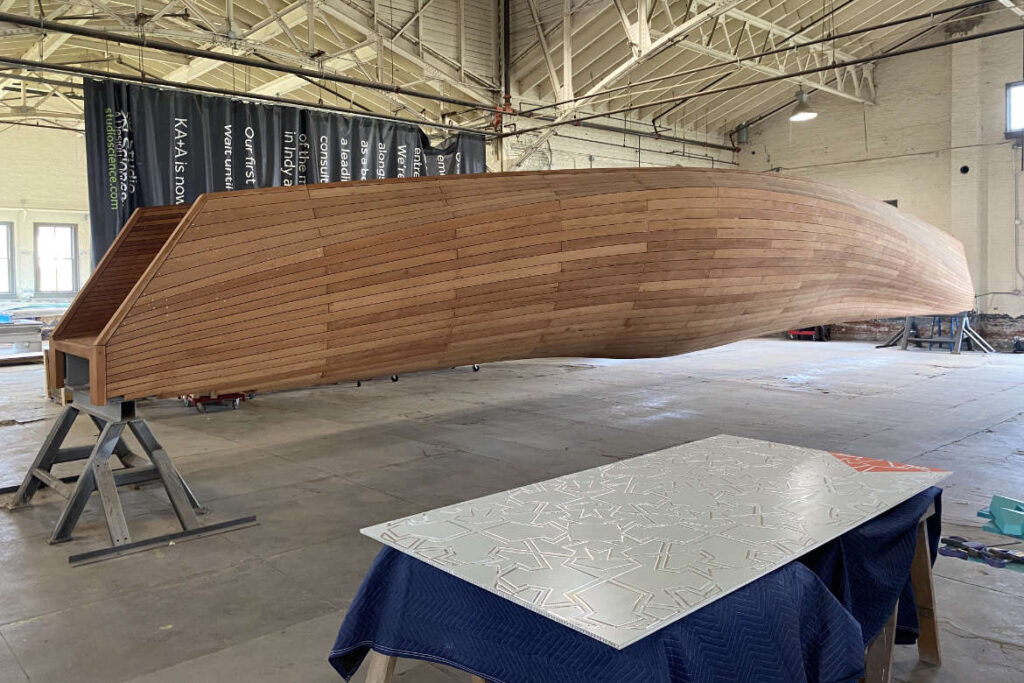
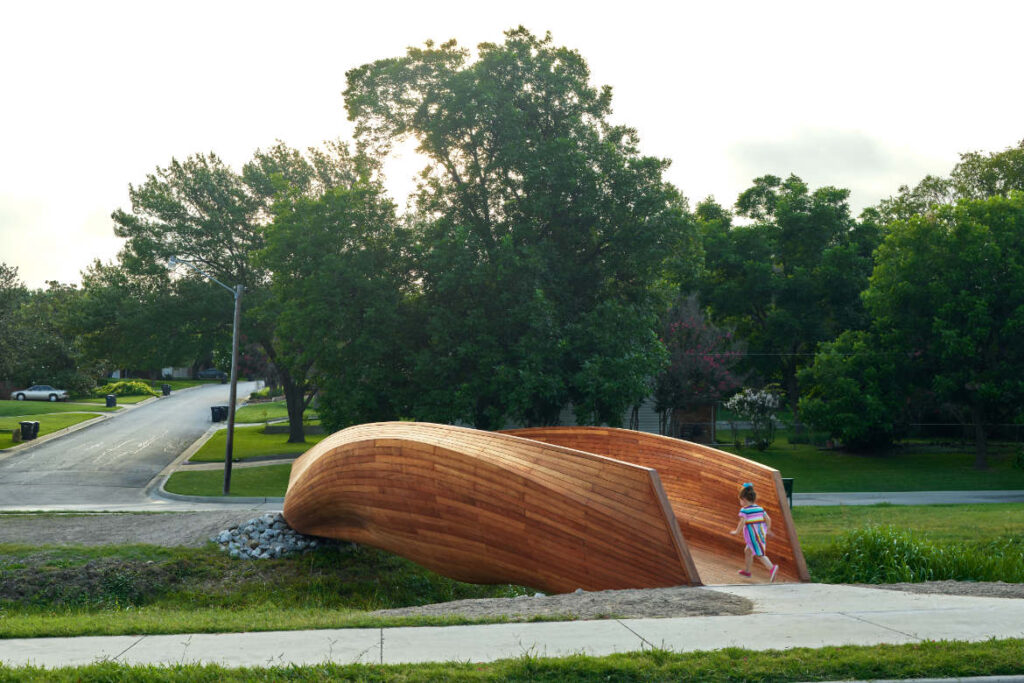
The Drift, a timber and steel pedestrian bridge in Texas, USA, is an innovative example of plug-and-play urbanism that we can learn from. Designed by Volkan Alkanoglu and fabricated off-site with an installation time of just a few hours, Drift is a community-driven, site-specific project created to bridge a physical divide – a creek – between two halves of one neighbourhood and their respective park systems. Historically, there had been no place to cross the 80-foot-wide culvert for seven blocks.

The site and its immediate surroundings that change depending on the season informed Alkanoglu’s design and material palette. The result is a 62-foot-long bridge made of steel armature and timber planks that resembles a smooth, curving branch of driftwood or a bowed bentwood splint, arching over the creek.
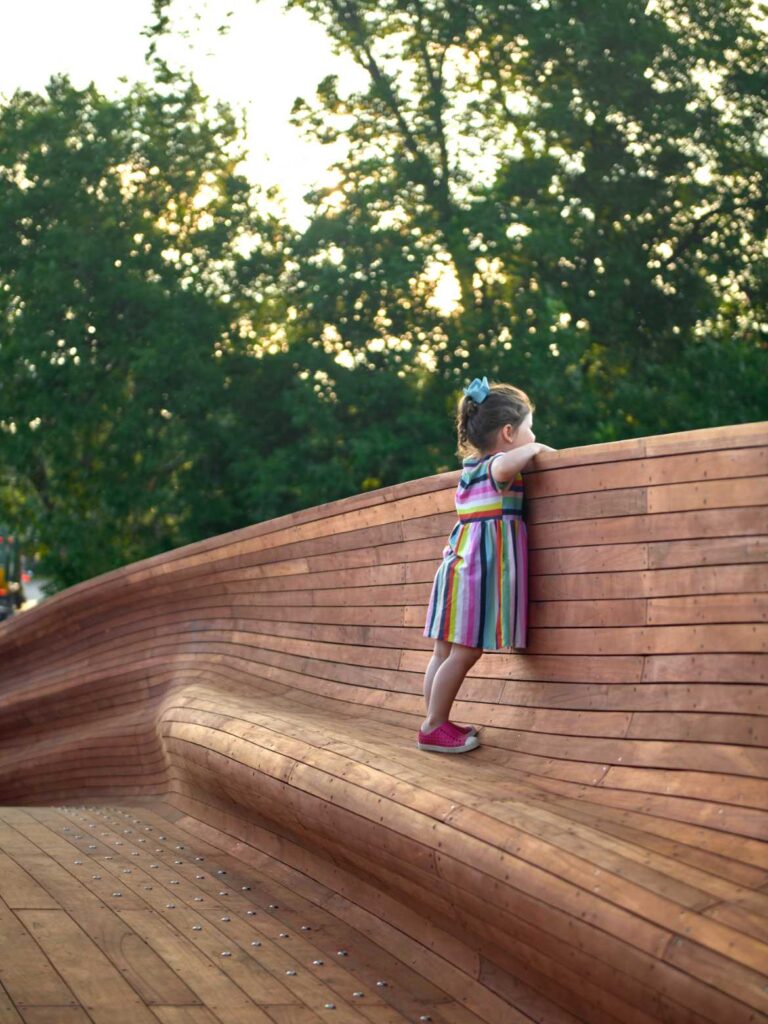
From other angles, it refers loosely to the hull of a ship, with a convex underbelly and a concave hull containing a pathway, benches, and railings. Uniquely, these elements are all built into a single form, where irregular undulations and curves are engineered for sitting and support. This innovation also draws inspiration from Charles Eames’ leg splint, “where every function occurs within a single figure,” explains Alkanoglu. Embedding the benches was a means of placemaking for Alkanoglu. With them, Drift becomes public art and a space for contemplation, recreation, and communing, rather than just a thruway or wayfinding mechanism.
INDESIGN is on instagram
Follow @indesignlive
A searchable and comprehensive guide for specifying leading products and their suppliers
Keep up to date with the latest and greatest from our industry BFF's!
The internet never sleeps! Here's the stuff you might have missed