The home of architecture and design in the Asia-Pacific
Get the latest design news direct to your inbox!

Get the latest design news direct to your inbox!
The colours, textures and profiles of Nepal inspired the design of Chilli Everest, creating a sensory and appealing experience for customers.


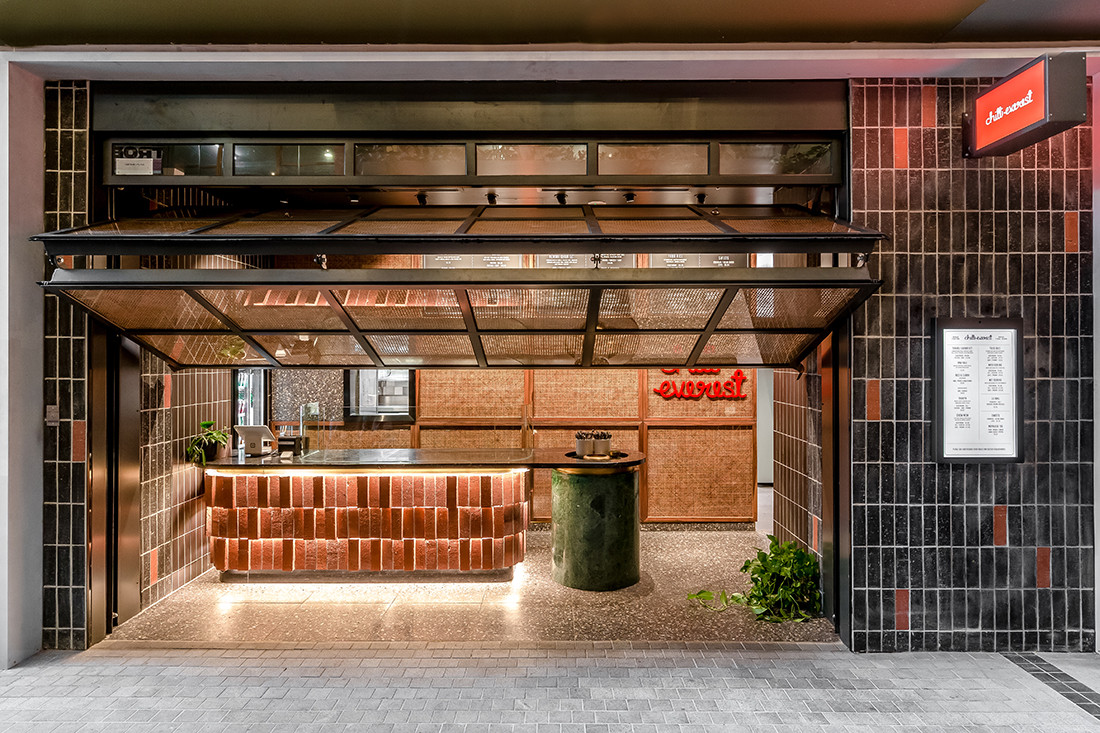

The design of high-quality fast-food venues requires a well-measured balance of customer experience and functional operations. Chilli Everest, designed by Architects EAT, is an eatery within Melbourne’s new ELLA precinct (named for where Elizabeth meets La Trobe). Offering convenient and authentic Nepalese cuisine, the compact venue is spiced up with tactile and layered design to create a sensory experience for customers.
“Chilli Everest offers a range of Nepali dishes, which present a mouthwatering variety of texture, colour and smell within the edges of one serving dish,” says Eid Goh, director of Architects EAT. “Similarly, the design fit-out captures a tantalising wealth of texture, colour and smell within a very small boundary, tempting and enticing the passing customer.”
Architects EAT drew inspiration from Nepal, looking to the colours and tiered profiles of the temples, monuments, countryside hills and food presentation. “Contrasting colours, material textures and illumination are used to create physical and visual layering within the space,” Eid explains.
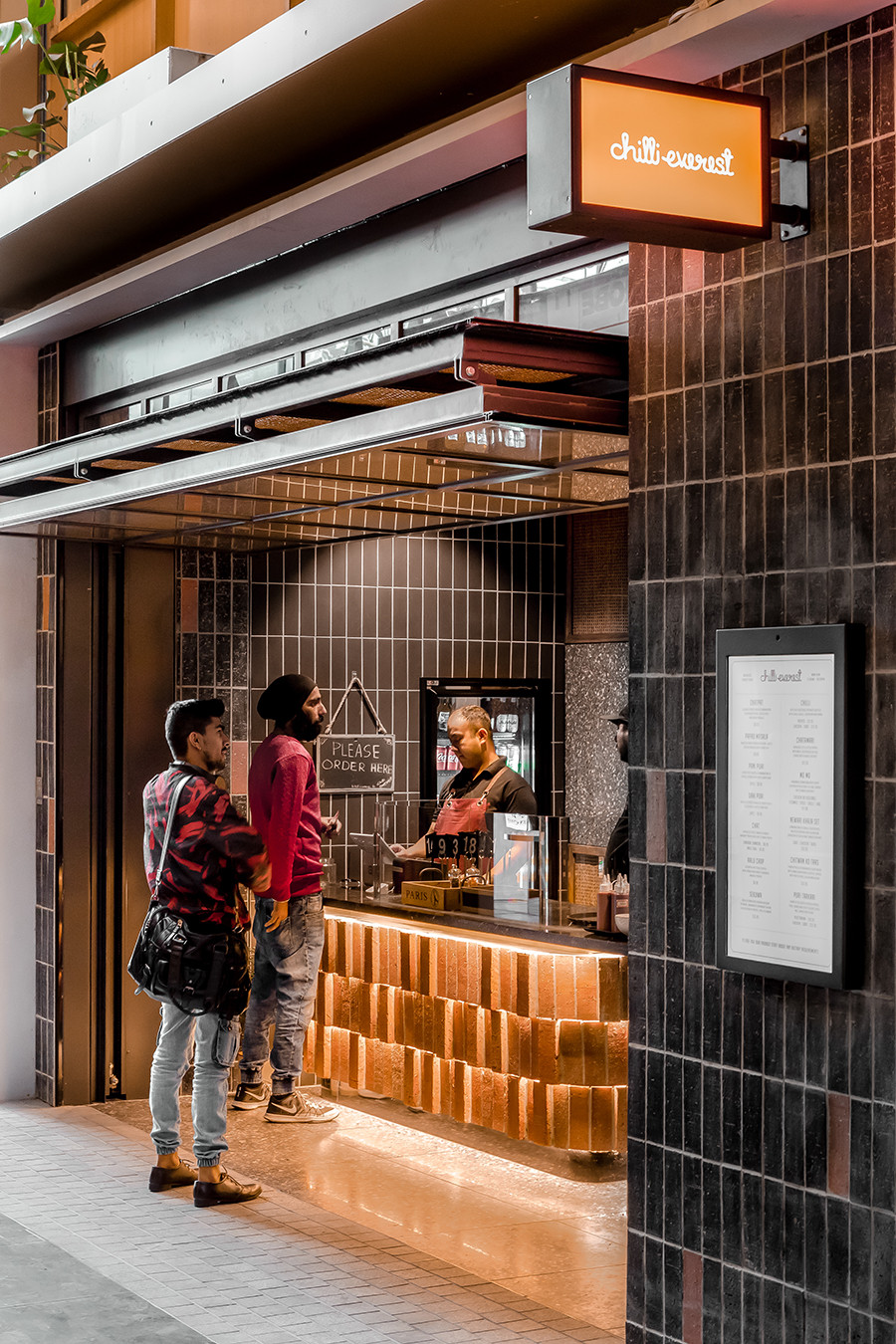
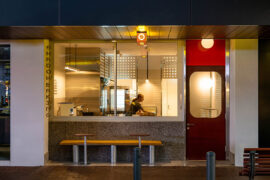
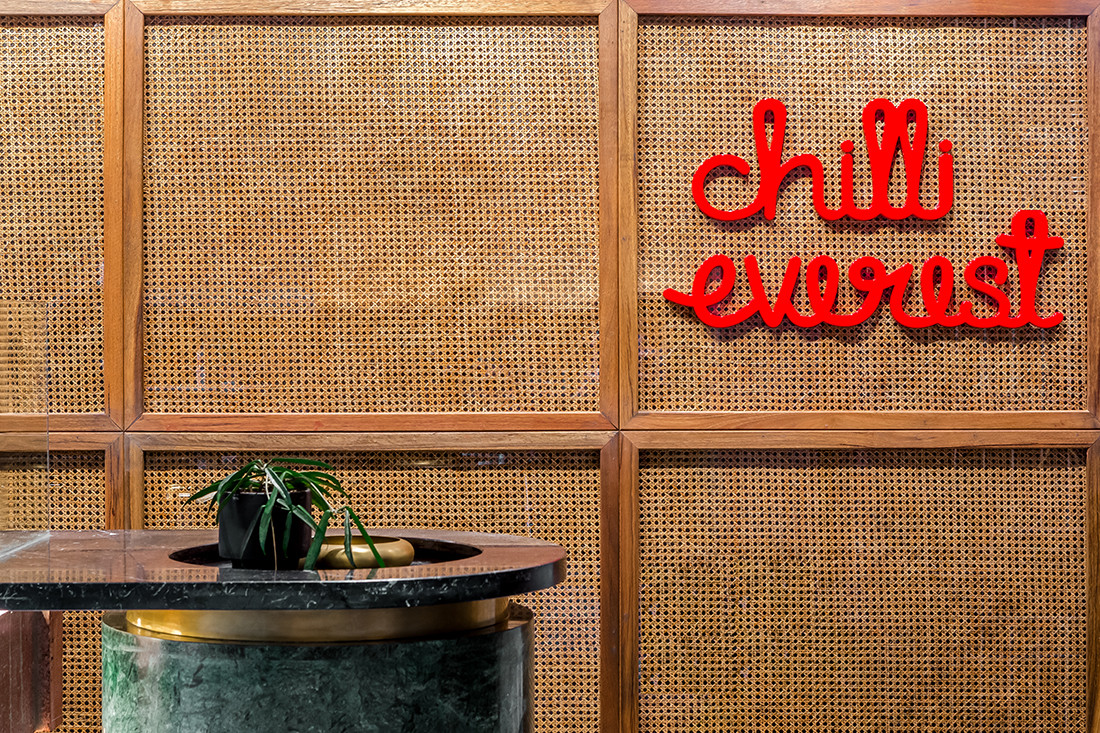
Black and terracotta brick-facing tiles distinguish the shopfront of Chilli Everest on the quasi laneway. These tiles wrap from the exterior of the shop into the interior walls, and rattan screening panels adorn the rear servery wall and shopfront door. The door – folding and unfolding as it slides up and down – was one of the first decisions Architects EAT made on the project as its operation and placement affected the layout. “The door system itself is actually quite simple and used extensively in the industry, but the clever application of rattan screening to the inside face of the glass panels gives the tenant privacy outside of trade and passing patrons a flavour of the interior and food that lies within,” Eid says.
The service counter is the “gem in the crown,” as Eid describes. Raw and monolithic, it has rows of vertical terracotta brick-face tiles illuminated with strip lighting to highlight their colour and texture and create variation of light and shadow. A black-veined marble benchtop culminates over a rich green-veined marble podium with brass trim in between the benchtop and base.
Grey terrazzo tiles on the front-of-house floor lead to the back-of-house where colour and texture gives way to a more subdued palette. Stainless steel, laminate joinery, gloss tiles and vinyl flooring in the back-of-house are in shades of grey to create a functional space for staff.
.
Want more hospitality? We think you’d like Bird + Bitter by Linehouse. Get more design inspiration, join our mailing list.
INDESIGN is on instagram
Follow @indesignlive
A searchable and comprehensive guide for specifying leading products and their suppliers
Keep up to date with the latest and greatest from our industry BFF's!
The internet never sleeps! Here's the stuff you might have missed